


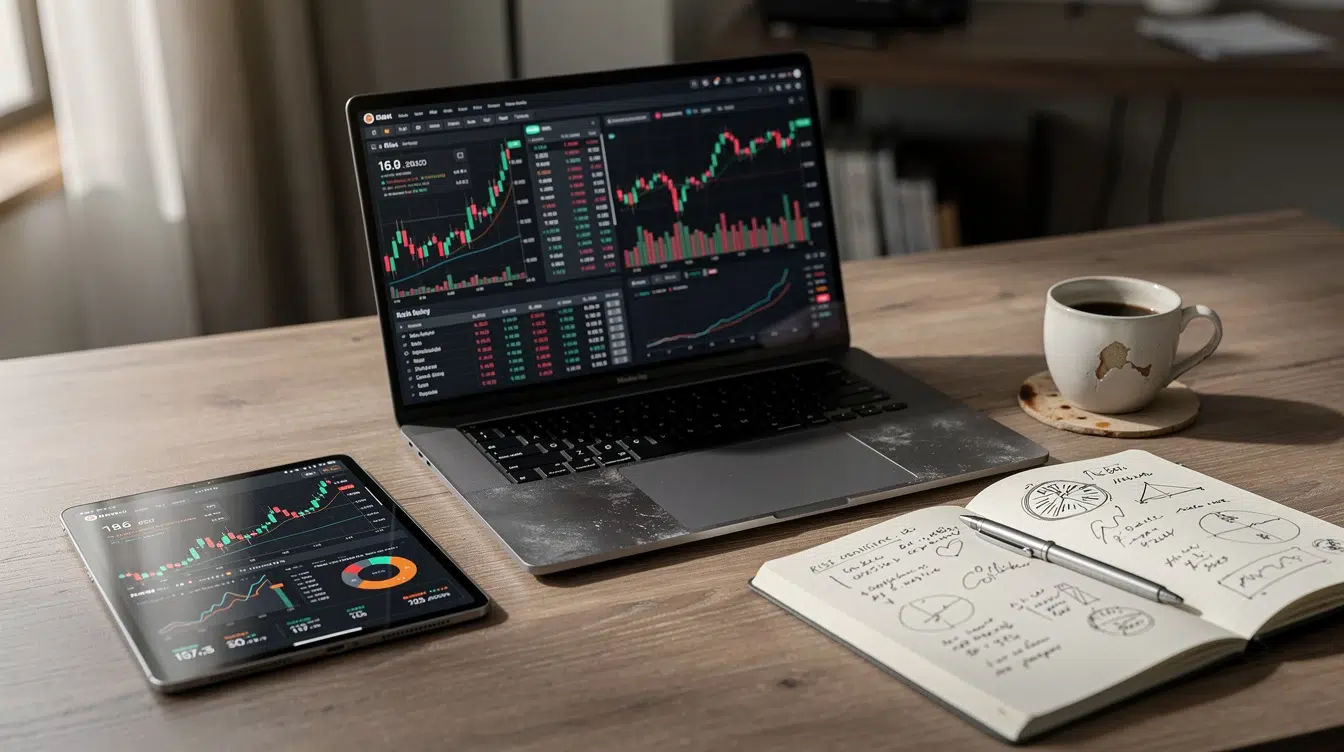
The relentless evolution of digital assets has transformed the cryptocurrency market into one of the world’s most competitive financial arenas. As expectations for performance and reliability intensify, advanced traders look far beyond basic charting to leverage breakthrough technologies. In 2026, gaining an edge is no longer about intuition—it’s about deploying disciplined, data-driven strategies. This article explores the most effective crypto trading tools for 2026 and highlights how platforms like Sumo Tradings use AI to set new standards in precision and risk management across all timeframes.
What defines a powerful crypto trading tool?
A top-tier crypto tool distinguishes itself by its ability to process vast datasets in real time, support hundreds of tokens, and adapt instantly to shifting volatility. With price discovery moving at unprecedented speed, success depends on information quality, reaction time, and robust automation.
But efficiency alone is not enough. The integration of artificial intelligence (AI), multi-timeframe analysis, and advanced risk management now separates yesterday’s high performers from tomorrow’s leaders. Traders need confidence that any automated system manages entries, exits, dynamic stop losses, and capital preservation with rigor and transparency.
How is AI transforming crypto trading?
Artificial intelligence is redefining what’s possible in market analysis. Modern crypto AI solutions combine machine learning, natural language processing, and pattern recognition to decode both technical signals and macroeconomic sentiment. Platforms leveraging these technologies move beyond manual strategies, delivering real-time alerts with proven accuracy.
This transformation empowers traders to capture fleeting price anomalies, automate risk controls, and maintain discipline during volatile periods. Machine-driven signal generation based on live order book data, volume imbalances, and cross-exchange liquidity enables users to exploit even microstructure inefficiencies without emotional bias.
- Signal detection at millisecond intervals
- Backtesting across thousands of crypto pairs simultaneously
- Adaptability to volatility using ATR-based rules
- Holistic sentiment tracking powered by LLM engines
Combining AI with traditional analysis methods
While AI dramatically accelerates screening and reaction time, experienced traders still complement it with classic charting and trend evaluation. Tools that blend algorithmic outputs with customizable overlays—such as EMAs, Fibonacci retracements, or support/resistance mapping—maximize decision-making power.
This hybrid approach delivers the best of both worlds: automation for speed, human oversight for validation. Ultimately, versatility prevails over reliance on any single style.
The impact of large language models (LLMs)
Large language models analyze unstructured news, developer updates, regulatory changes, and community sentiment at scale. They offer context-rich insights, quantifying soft market variables often ignored by rigid quantitative systems.
State-of-the-art platforms now integrate LLMs directly into their workflows, detecting trend reversals after viral tweets, whale wallet movements, or sudden exchange disruptions. These capabilities are vital when milliseconds determine outcomes.
Top categories of must-have crypto tools for 2026
With countless apps claiming innovation, distinguishing true utility from hype is a skill in itself. In 2026, leading traders deploy a curated stack covering four pillars: analysis, execution, risk control, and portfolio management.
These foundational blocks form repeatable processes—each enhanced by integrated AI modules—to meet the demands of evolving market structure and the trader’s need for security and speed.
- Multi-timeframe screeners: Capture actionable signals across 5m, 15m, 1h, and daily windows.
- Algorithmic signal platforms: Provide precise buy/sell points with transparent backtesting and statistical performance tracking.
- Risk managers: Enforce adaptive TP/SL parameters based on volatility metrics like ATR.
- Automated rebalancers to maintain allocation discipline in fast-moving portfolios.
- Sentiment analytics suites leveraging LLMs to synthesize trends from social feeds, GitHub, and regulatory headlines.
Where does Sumo Tradings stand out among competitors?
Sumo Tradings sets a new benchmark for quantitative crypto platforms by fusing five proprietary AI engines with real-time coverage of over 1500 tokens on Binance, Bybit, and Coinbase. Its strength lies in both signal quality and consistent outperformance, evidenced by a win rate of 94.2%—independently verified over months of operation.
Unlike generic bots or static dashboards, Sumo engineers every signal around robust volatility models, automatically adjusting targets and stops—a cornerstone of conservative risk management. Advanced position sizing and ATR-based algorithms minimize drawdowns while allowing profitable trades to run within trending markets.
Multi-timeframe signal detection in practice
Given the extreme variability between scalping sessions and daily swings, Sumo Tradings cross-validates opportunities across multiple timeframes. This approach allows users to balance rapid responses with longer-term confirmation, reducing false positives and typical drawdowns seen with single-timeframe systems.
Every recommendation includes explicit entry, take-profit, and stop-loss levels calibrated for current volatility conditions. The outcome: reliable alerts suitable for aggressive intraday moves as well as patient swing setups.
Transparency, measurable performance, and risk-first automation
Traders increasingly reject opaque “black box” solutions. Sumo provides historical accuracy data, real-time win/loss breakdowns, and full parameter transparency for each signal. Every alert details the rationale and calculated win probability, enabling users to audit decisions and strengthen their own strategy.
By prioritizing risk metrics over rare outsized gains, the platform aligns incentives with long-term survival—a critical factor for professionals seeking to avoid catastrophic errors or compounded losses due to poor automation.
Choosing your technology stack as a professional trader
Advanced market participants select tools that fit their workflow rather than chasing passing trends. They value rapid adaptation to new volatility spikes and regulatory shocks. A robust 2026 stack will include AI-powered screeners, flexible signal generators, comprehensive risk engines, and modular integrations with execution venues.
True competitive advantage comes from adopting coherent systems capable of evolving alongside the crypto ecosystem. Only platforms with proven resilience, clear performance metrics, and rigorous risk controls become trusted partners for serious traders.
Future developments in crypto toolkits for 2027 and beyond
Looking ahead, seamless API connectivity, edge analytics, and deep token-specific customization will only gain importance. Trends point toward further merging of discretionary and fully autonomous trading as AI interprets ever-larger streams of granular data.
Sumo Tradings, through ongoing research into reinforcement learning, position clustering, and stress-tested scenario planning, aims to be much more than a signal provider. It is evolving into an indispensable command center for traders who demand unwavering discipline and transparency, regardless of where the next wave of crypto volatility leads.