


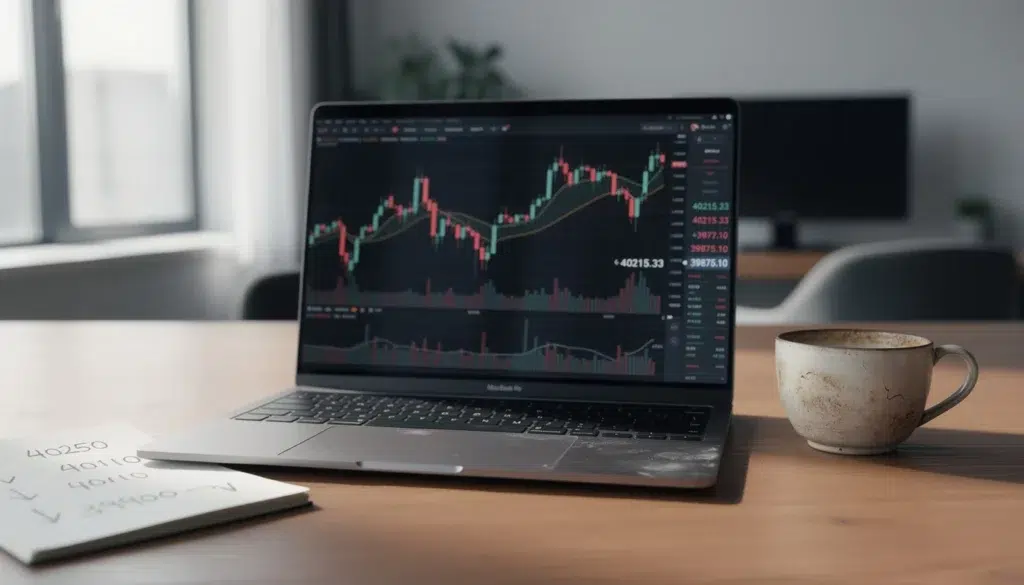
Trading cryptocurrencies means navigating fast-moving markets where both precision and speed are essential for maximizing performance. One concept that often catches even seasoned traders off guard is slippage. Whether you’re scalping on short timeframes or executing swing trades, slippage can directly influence your results by creating a gap between your planned and actual outcomes. By understanding what causes slippage, how to measure it, and applying techniques to control its effects, traders can optimize risk management and improve consistency in their trading strategies—especially when supported by a reliable Crypto trading plateform.
What is slippage in crypto trading?
Slippage is the difference between the expected price of a cryptocurrency transaction and the executed (final) price at the moment of order execution. It most frequently occurs during periods of high volatility or when placing large orders relative to available market liquidity. Slippage becomes particularly relevant with market orders, which prioritize immediate execution at the best current price. For instance, if you aim to buy Bitcoin at $40,000 but your order fills at $40,120, the actual trade price is less favorable than expected. This gap represents negative slippage. While positive slippage—where you receive a better price—can happen, it’s uncommon. Mastering these nuances is critical for traders seeking to minimize losses and maintain reliable profits.Why does slippage happen in crypto markets?
Multiple factors contribute to slippage in crypto trading. The primary cause is rapid market movements triggered by increased activity, news events, or sudden sentiment shifts. When the order book lacks sufficient depth, especially for large orders, the risk of slippage increases significantly. The type of order also affects slippage. Market orders ensure fast execution but can suffer from worse pricing, while limit orders offer more control over price but may not fill if the target rate isn’t reached. How these order types interact with liquidity and the order book structure determines how far the final price can deviate from your intention.- Low liquidity platforms dramatically increase slippage risk.
- High-frequency tactics like scalping face greater exposure due to execution urgency.
- Sudden announcements can rapidly push prices away from stable levels, increasing unpredictability.
How do large orders influence slippage?
Large orders can move the market themselves, causing a notable difference between expected price and executed/final price. On exchanges with limited depth, fulfilling such orders requires consuming multiple levels of the order book, resulting in each portion being filled at progressively worse prices. This amplifies slippage and erodes profitability. An advanced method to address this involves splitting large trades into smaller algorithmic segments. This approach allows portions to be filled without overwhelming liquidity, helping to minimize slippage and manage risk more effectively—a common practice among institutional and professional traders.How do volatile markets affect order execution?
Periods of high volatility create accelerated moves in both directions, so the price available just milliseconds before your trade can disappear as soon as your order enters the book. For traders relying on instant decisions, this environment raises both the probability and severity of slippage. Accurate assessment of price impact becomes key for defensive position management. Advanced tools using real-time analytics can alert you when volatility spikes, prompting strategic adjustments—such as altering order size, fine-tuning slippage tolerance, or waiting for calmer conditions. This adaptability provides a measurable edge versus fixed, inflexible decision-making processes.Assessing and controlling slippage tolerance in trades
Most trading platforms let users set a slippage tolerance, defining the maximum acceptable deviation between intended and executed trade price. A well-calibrated tolerance acts as a safety net, rejecting trades that would execute outside your defined risk parameters during sharp price swings. If your slippage setting is too strict, you risk missing profitable trades because minor fluctuations could block legitimate orders. If it’s too loose, you expose yourself to unfavorable executions and potentially larger losses. Using data-driven backtesting helps establish optimal thresholds tailored to specific tokens and trading approaches.- Scalpers often choose tight tolerances—down to 0.05–0.10%—to protect against quick adverse moves.
- Swing traders who hold positions longer may accept slightly wider margins for flexibility.
- Illiquid or small-cap tokens require higher tolerances to account for their increased volatility.