


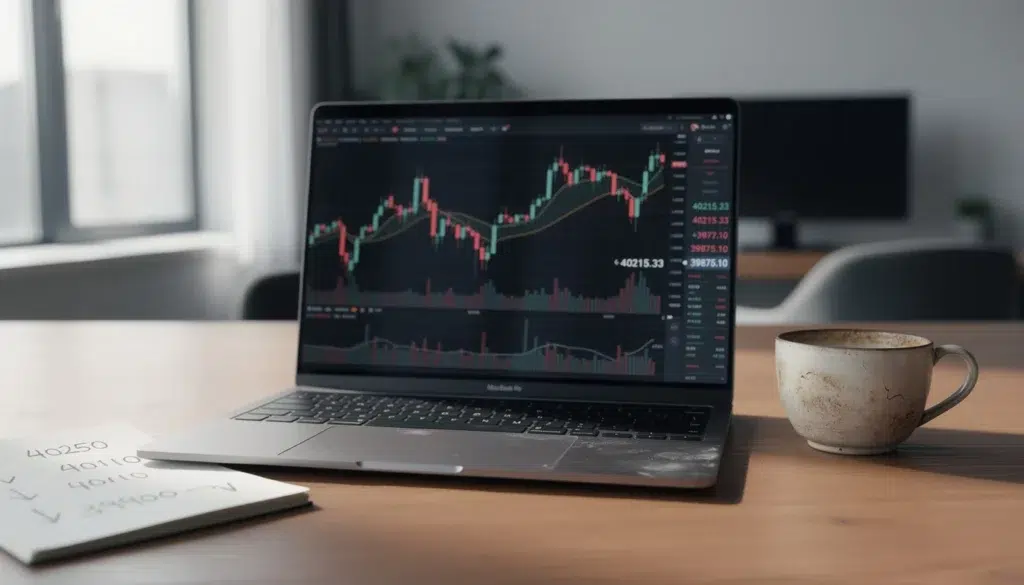
Swing trading has established itself as a leading approach for crypto traders aiming to capitalize on price swings in dynamic market environments. Unlike day trading, which focuses on rapid trades within hours or minutes, swing trading targets broader movements unfolding over a holding period of several days to weeks. By leveraging both technical analysis and the unique volatility of digital assets, swing traders position themselves to profit from fluctuations while maintaining disciplined risk management—an approach that becomes even more effective when structured through a professional Crypto trading plateform.
.
Understanding swing trading in the crypto market
The crypto market is known for its 24/7 access, deep liquidity across numerous pairs, and pronounced price movements. Swing trading takes advantage of these characteristics by riding trends or countertrends as they develop. Trades are typically held longer than those in short-term trading strategies but are closed before evolving into long-term investments. This timeframe enables traders to benefit from significant intermediate moves, avoiding much of the noise that affects scalpers or intraday traders.
A successful swing trading strategy depends on accurately reading momentum shifts, recognizing common chart patterns, and planning entries and exits around key support and resistance zones. The focus remains on trading setups where the expected reward clearly outweighs the likely risk, especially during periods of heightened market volatility.
The foundations of an effective swing trading strategy
Building a robust swing trading plan demands clear objectives, patience for ideal opportunities, and strict adherence to technical criteria. Traders often scan hundreds of cryptocurrencies, searching for coins at inflection points—whether due to breakouts, mean reversions, or reversal signals.
At the core of every swing trader’s edge lies precise buying and selling timing. Poor timing can erode returns even when the overall direction is correct. A well-defined process anchors decisions within a proven methodology, ensuring consistency across different market conditions.
How market volatility creates swing trading opportunities
Market volatility serves as both a catalyst and a challenge for swing traders. Volatile periods often generate extended price swings, creating more room to profit from fluctuations over manageable holding periods. Cryptocurrencies frequently experience sharp price accelerations driven by news, macro events, or sudden sentiment changes, amplifying classic chart pattern outcomes.
While increased volatility can expand potential gains, it also elevates the importance of rigorous risk management. Careful analysis of average true range (ATR) and other metrics helps calibrate stop losses and position sizing to withstand unexpected reversals.
Choosing trading setups suitable for swing trades
Not every scenario in the crypto market is suited for swing trading. High-conviction trading setups usually align with clear trend resumptions, pullback entry points, or defined reversion-to-mean situations. Patterns such as bull flags, channels, double tops and bottoms, or triangle consolidations form the backbone of a swing trader’s toolkit.
Before allocating capital, experienced traders backtest their systems, validating entry and exit rules under varying market contexts. This disciplined process ensures a consistent approach to identifying the most lucrative opportunities, regardless of prevailing market direction.
Integration of technical analysis for optimal buying and selling timing
Crypto Technical analysis drives nearly every aspect of the swing trading process. From detecting momentum divergences to confirming breakout volume or pinpointing oversold levels, technical signals guide crucial decisions about when to enter or exit positions. Compared to long-term investing, swing trading maintains a tighter feedback loop through frequent review and adjustment.
Chart indicators—including moving averages, RSI, MACD, and Bollinger Bands—help define high-probability zones for entries and exits. Meanwhile, candlestick formations and higher timeframe structures provide essential context for evaluating risk versus anticipated reward.
- Identify dominant market trends using moving averages.
- Locate turning points with oscillators like RSI and MACD.
- Confirm momentum and volume spikes at breakout levels.
- Set stop loss below major support or above resistance.
- Calculate potential targets based on prior swing highs and lows.
Risk management: surviving crypto’s unpredictable environment
Disciplined risk management is non-negotiable in swing trading crypto. Every position begins with a predetermined maximum loss, calculated using volatility measures and account size. Advanced practitioners employ position sizing formulas to ensure no single trade endangers overall capital, particularly given the erratic price action typical of digital assets.
Stop-loss placement adjusts dynamically, responding to changing ATR values or recent structural lows and highs seen on charts. Beyond individual trades, ongoing portfolio evaluation limits correlated exposure between assets that move together, further protecting against severe drawdowns.
The impact of holding period and short-term trading goals
Selecting the right holding period is crucial for swing trading success. Crypto markets can produce substantial moves in just a few days, but chasing moves across overly broad timeframes risks undermining your core edge. Most swing traders establish adaptive rules, tightening stops as trades progress and scaling out profits as targets near.
Balancing the agility of short-term trading with the patience required by swing trading leads to fewer trades but greater conviction per setup. This approach keeps transaction costs low and reduces errors driven by emotion.
The role of consistency in executing plans
Consistency sets top swing traders apart from those struggling for stable results. It means not deviating from pre-defined trading setups, following established technical triggers, and documenting every executed trade for thorough review. Common pitfalls include overtrading, abandoning stops, or reacting impulsively to headlines or social media.
By focusing on a select group of refined strategies and keeping meticulous records, traders sharpen their understanding of what works across both winning and losing streaks. This continuous improvement cycle ultimately boosts win rates and controls downside risks.
Advantages and limitations specific to swing trading crypto
Swing trading offers notable advantages in the crypto space, especially for those who cannot monitor screens constantly. Greater flexibility regarding the holding period, improved returns during sustained volatility, and reduced psychological strain are key benefits. It also allows traders to exploit inefficiencies unique to round-the-clock markets.
However, this style comes with challenges. Overnight gaps, sudden regulatory updates, or unexpected platform outages introduce distinct risks. Staying responsive yet systematic—and grounding all decisions in robust technical analysis—is vital for long-term outperformance in crypto swing trading.